
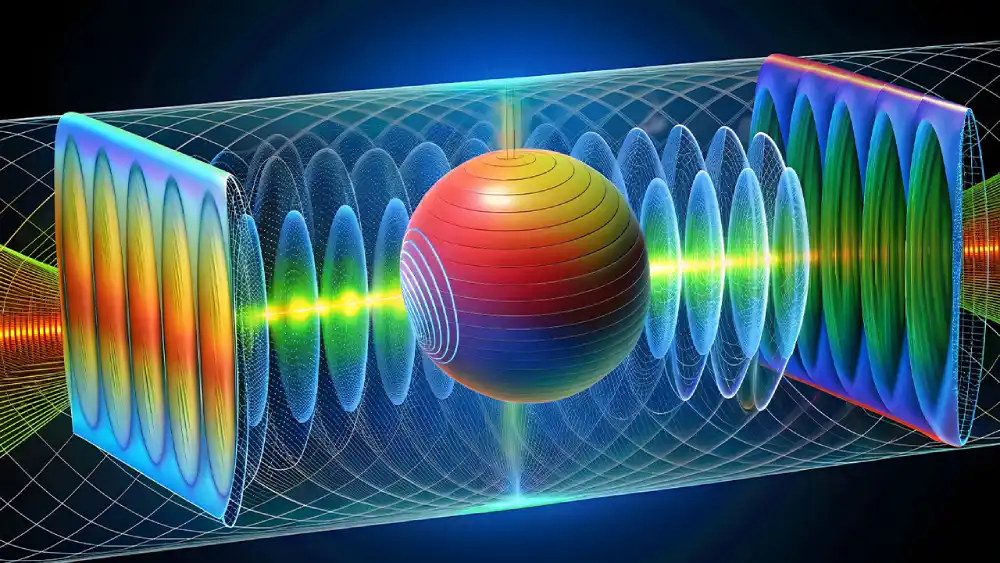
This blog post explores the intriguing principles of low frequency physics and its impact on object movement. It begins by explaining the science behind low-frequency vibration, highlighting how these vibrations can affect objects at a physical level. The article further delves into the concept of resonance power, illustrating its crucial role in amplifying the effects of low-frequency vibrations. Additionally, it discusses acoustic impulse, showcasing the potential applications of low-frequency physics in real-world scenarios. Finally, the post summarizes key takeaways for maximizing the effects of low-frequency vibration, providing valuable insights for readers interested in harnessing these principles for various purposes. Overall, this exploration of low frequency physics offers a comprehensive understanding of how low-frequency vibrations can influence the movement of objects and their applications.
Understanding Low-Frequency Vibration: The Science Behind Object Movement
Low frequency physics plays a crucial role in comprehending the vibrational behavior of various objects. This phenomenon is often observed in systems where vibrations occur at lower frequencies, typically below 20 Hz. Such low-frequency vibrations can significantly affect the movement and stability of structures, ranging from engineering designs to natural systems. Understanding the science behind these vibrations provides insights into how resonance power can amplify effects, leading to both desired and unintended consequences in multiple applications.
Key Areas of Exploration
- Fundamentals of low frequency physics and vibrations
- The impact of material properties on vibrational behavior
- Applications in engineering and construction
- Natural occurrences of low-frequency vibrations, such as earthquakes
- Resonance phenomena and its implications
- Measurement techniques for analyzing low-frequency vibrations
- Innovative uses of low-frequency vibrations in technology
Exploring these areas allows researchers and practitioners to optimize designs and mitigate risks associated with resonance power. By examining how objects respond to low-frequency stimuli, we gain a deeper understanding of not only their physical properties but also how these properties can be harnessed for practical applications. This combined knowledge is instrumental in advancing technology and improving safety measures in environments where vibration is a critical factor.
The Role of Resonance Power in Low-Frequency Vibration

Resonance power plays a pivotal role in low-frequency vibration, impacting the movement of objects and the behavior of various physical systems. When systems resonate at their natural frequencies, they can absorb substantial amounts of energy with minimal external influence. This phenomenon is crucial in low-frequency physics, as the frequency of the vibrations can significantly influence the amplitude and energy transfer. By understanding resonance power, researchers and engineers can optimize designs and control the behavior of mechanical systems effectively.
One major aspect of resonance power is its ability to amplify vibrations in structures, potentially leading to structural failures if not properly managed. This amplification is a double-edged sword—it can be used beneficially in applications like musical instruments and engineering systems but can also pose risks in tall buildings or bridges. Understanding how to harness and control resonance power within low-frequency frameworks is essential for ensuring stability and performance in various applications.
| Application Area | Resonance Effects | Implications |
|---|---|---|
| Musical Instruments | Enhanced sound through resonance | Improved auditory experience |
| Structural Engineering | Amplification of vibrations | Need for mitigation strategies |
| Geophysical Studies | Earthquake wave modeling | Predictive analytics for building safety |
| Medical Imaging | Signal enhancement in scans | Sharpened diagnostic capabilities |
To effectively leverage resonance power in low-frequency vibration, several steps should be followed. Identifying the natural frequency of the system and ensuring the energy input aligns with this frequency can enhance performance while minimizing adverse effects. Furthermore, effective damping techniques and materials can be utilized to control unwanted resonance and ensure the desired outcomes are achieved.
Steps to Harness Resonance Power
- Identify the natural frequency of the system to understand resonance points.
- Align energy input with the natural frequency for maximum energy absorption.
- Utilize damping techniques to mitigate unwanted vibrations.
- Test different materials for effective vibration control.
- Monitor results to evaluate the effectiveness of the resonance application.
- Adjust system parameters based on feedback to optimize performance.
Applications of Resonance Power
The applications of resonance power span various fields including engineering, architecture, and acoustics. In structural engineering, for example, the resonance phenomenon can lead to both advantages and disadvantages. Skyscrapers are designed with resonance in mind to withstand high winds and earthquakes by enabling controlled oscillation. In acoustics, resonance power is harnessed in musical instruments to amplify sound, delivering richer tones and enhancing the auditory experience. Understanding these applications allows for improved design and functionality across disciplines.
Case Studies on Low-Frequency Physics
Several case studies illustrate the importance of resonance power in low-frequency physics. For instance, researchers have studied the effects of resonance on bridge construction, leading to innovative designs that mitigate vibration hazards. Another study focused on tuning forks, where resonance power was utilized to explore sound wave amplification. These insights not only advance our understanding of low-frequency vibration but also enable practical applications in engineering and safety practices.
Acoustic Impulse: Unleashing the Potential of Low-Frequency Physics
Low frequency physics plays a crucial role in understanding how vibrations affect object movement. The principles behind low-frequency vibrations reveal intriguing insights into energy transfer, material behavior, and resonance. One of the most significant phenomena in this realm is the acoustic impulse, which offers a pathway to leveraging low-frequency physics effectively. By harnessing these principles, we can manipulate vibrations to achieve desired effects, be it in engineering, musiç or various scientific applications.
Impact of Acoustic Impulse on Vibration
The impact of acoustic impulse on vibration cannot be overstated. By generating specific low-frequency vibrations, we create acoustic impulses that can influence material properties and movement dynamics. This process often leads to enhanced efficiency in technology and innovation. For instance, in construction and manufacturing, sound waves can be utilized to optimize processes and reduce energy consumption. Understanding how these acoustic impulses work forms the backbone of advancements in low-frequency physics.
Benefits of Acoustic Impulse
- Enhanced Material Efficiency: Improves energy transfer and minimizes waste.
- Innovative Applications: Utilized in various fields such as engineering and medicine.
- Cost-Effective Solutions: Reduces operational costs through energy savings.
- Improved Sound Quality: Optimizes acoustics in music and audio equipment.
- Advanced Vibration Control: Allows precise manipulation of object movement.
- Increased Safety: Mitigates risks in construction through vibration monitoring.
- Research and Development: Drives progress in scientific studies and experiments.
In summary, the interplay between acoustic impulses and low frequency physics holds significant promise. With a deeper understanding and application of these concepts, we unlock new potential in various sectors. The possibilities for innovation and improvement in efficiency and performance are vast, making low-frequency physics a field worth exploring further.
Maximizing the Effects of Low-Frequency Vibration: Key Takeaways
To effectively harness the benefits of low-frequency vibration, understanding the underlying principles of low frequency physics is essential. By appreciating how these vibrations interact with different materials and environments, you can maximize their efficacy in various applications. Low-frequency vibrations are particularly effective in enhancing energy transfer, modifying mechanical properties, and optimizing the performance of specific objects, making them a valuable tool in engineering and scientific research.
Actionable Steps for Implementation
- Identify the specific application of low-frequency vibration.
- Assess the properties of the materials involved for effective resonance matching.
- Utilize precise vibration frequencies to achieve the desired response.
- Implement monitoring systems to measure vibration effects on objects.
- Adjust environmental conditions to minimize interference.
- Incorporate feedback mechanisms to fine-tune the vibration parameters.
- Document findings and outcomes for future reference.
When you implement these steps, consider the impact of resonance power, as it plays a critical role in optimizing low-frequency vibrations. By focusing on effective vibration practices, one can enhance both the structural integrity and functionality of various items, leading to innovative solutions in technology and mechanics. In the realm of low frequency physics, recognizing the interaction between vibrational frequencies and material responses can lead to breakthroughs in performance enhancement.
Frequently Asked Questions
What is low-frequency vibration and how does it relate to physics?
Low-frequency vibration refers to oscillations at low frequencies, typically below 20 Hz. In physics, these vibrations can affect the movement of objects, as they can resonate with the natural frequencies of materials, causing shifts or movements.
How does resonance influence object movement in relation to low-frequency vibration?
Resonance occurs when an object’s natural frequency matches the frequency of an external force, which can lead to significant movements. In low-frequency vibration, this can amplify the effects of the vibrations, causing larger displacements in objects.
Can you explain what acoustic impulse means in the context of low-frequency physics?
An acoustic impulse is a sudden force generated that can produce low-frequency vibrations. In low-frequency physics, this can unleash significant energy, allowing for the movement of objects as the vibrations travel through various mediums.
What are some applications of low-frequency physics in everyday life?
Low-frequency physics has applications in various fields, including engineering (such as structural analysis), environmental science (monitoring seismic activity), and even music (where low frequencies contribute to sound design). These applications utilize the principles of vibration and resonance.
How can low-frequency vibrations be harnessed for practical uses?
By understanding the properties of low-frequency vibrations, engineers can design systems that utilize these vibrations for tasks such as material testing, seismic protection for buildings, and even therapeutic applications in medicine.
What are potential concerns or challenges associated with low-frequency vibrations?
Challenges include the potential for structural damage to buildings or infrastructure if they resonate at low frequencies during events like earthquakes or heavy machinery operations. Engineers must mitigate these risks through careful design and materials selection.
Are there any health effects associated with prolonged exposure to low-frequency vibrations?
Yes, prolonged exposure to low-frequency vibrations can lead to health issues such as discomfort, fatigue, and even musculoskeletal disorders. It is important to assess and limit exposure, especially in occupational settings.
How does the understanding of low-frequency physics affect engineering designs?
Engineers must incorporate the principles of low-frequency physics in designs to ensure stability and durability, particularly in buildings and structures expected to withstand dynamic conditions such as seismic activity or heavy vibrations.
What are some effective ways to maximize the benefits of low-frequency vibration?
To maximize benefits, it’s essential to understand the specific frequency ranges required for each application, employ materials that can withstand resonance without damage, and utilize damping techniques to control unwanted vibrations.
What key takeaways should readers remember about low-frequency vibration and its impact on object movement?
Understanding low-frequency vibration and resonance is crucial for many applications, as they can significantly impact object movement. Awareness of both beneficial uses and potential risks is essential for effective application in engineering and safety management.